


How to Choose the Right Cavity Number (2, 4, 6, 8) for Your PET Blowing Machine
 Mar 30, 2026|
 View:563
Choosing the right cavity configuration for a PET blowing machine directly impacts production efficiency, operational costs, and long-term profitability. This comprehensive guide explores how manufacturers can select the optimal cavity number between 2, 4, 6, and 8 cavities based on their production requirements, budget constraints, and growth projections.
Key Takeaways
Production volume requirements determine the baseline cavity number: 2-cavity machines suit small-scale operations (1,800-2,500 BPH), while 8-cavity systems serve high-volume manufacturers (12,000+ BPH)
Initial investment increases proportionally with cavity count, but per-bottle production costs decrease significantly for higher-cavity machines
Space availability and infrastructure capacity (electrical power, compressed air) must align with machine specifications
Future scalability should influence the decision—starting with modular systems allows gradual expansion without complete equipment replacement
Energy efficiency improves with modern cavity designs, with some configurations achieving over 30% savings compared to traditional systems
Understanding PET Blowing Machine Cavity Configurations
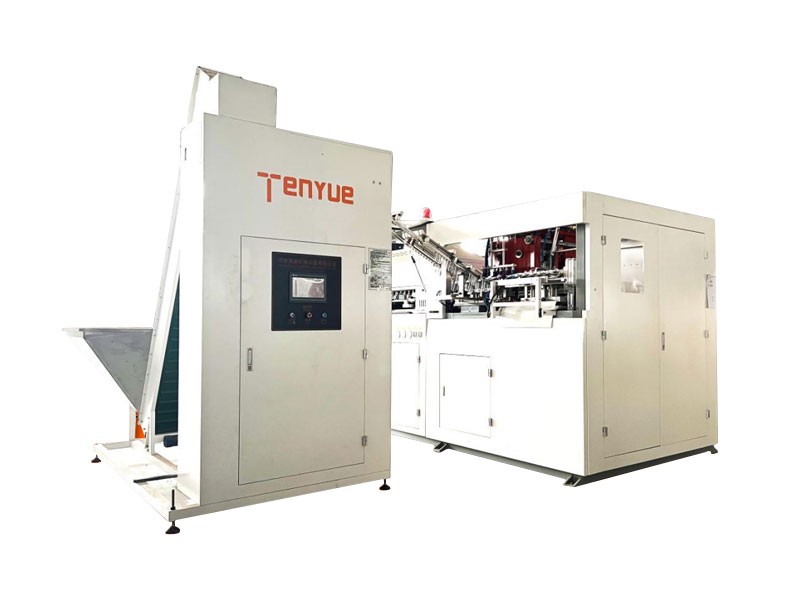
A PET blowing machine transforms preforms into finished plastic bottles through stretch blow molding technology. The cavity number refers to how many bottles the machine produces simultaneously in each molding cycle. This fundamental specification determines production capacity, operational efficiency, and manufacturing economics.
Modern PET blowing machines utilize either cylinder-driven or servo-driven systems to control the molding process. Each cavity contains a complete mold set where preforms are heated, stretched, and blown into their final bottle shape. The synchronized operation across multiple cavities enables manufacturers to scale production without proportionally increasing floor space or labor requirements.
How Cavity Number Affects Production Capacity
Production capacity measured in bottles per hour (BPH) scales directly with cavity count. A 2 cavity PET blowing machine typically produces 1,800-2,500 bottles per hour depending on bottle size and cycle time. A 4 cavity PET blowing machine doubles this output to approximately 4,000-5,000 BPH, while 6 cavity and 8 cavity configurations reach 7,000-9,000 BPH and 12,000-15,000 BPH respectively.
The relationship between cavities and output follows a linear progression, but operational efficiency gains emerge at higher cavity counts. Manufacturers sharing heating zones, control systems, and air compressors across more cavities achieve better resource utilization rates.
| Cavity Number | Production Capacity (BPH) | Typical Bottle Size | Target Market Segment |
|---|---|---|---|
| 2 Cavity | 1,800-2,500 | 1L-1.5L | Small-scale producers, startups |
| 4 Cavity | 4,000-5,000 | 500ml-750ml | Growing businesses, regional distributors |
| 6 Cavity | 7,000-9,000 | 500ml-600ml | Medium-volume manufacturers |
| 8 Cavity | 12,000-15,000 | 500ml-1L | High-volume industrial facilities |
Evaluating Production Volume Requirements
The first step in selecting cavity configuration involves calculating actual production requirements. Manufacturers should project daily, weekly, and annual bottle needs based on existing orders, market demand forecasts, and growth trajectories. This analysis prevents both under-investment in insufficient capacity and over-investment in unnecessarily large systems.
Matching Cavity Count to Business Scale
A 2 cavity PET blowing machine serves businesses requiring 3,000-5,000 bottles daily during single-shift operations. This configuration suits bottled water startups, specialty beverage producers, and contract manufacturers handling multiple small product lines. The lower capital investment and simplified operation make 2-cavity systems attractive entry points for the PET bottle manufacturing industry.
Businesses experiencing steady demand exceeding 8,000 bottles daily should consider 4 cavity PET blowing machine options. This mid-range configuration balances investment costs with production capabilities suitable for regional brands, expanding beverage companies, and medium-volume contract packagers. The increased output justifies the higher equipment cost through improved economies of scale.
High-volume operations demanding 15,000 bottles or more per shift benefit from 6 cavity PET blowing machine and 8 cavity PET blowing machine configurations. These systems support large beverage manufacturers, national brands, and high-capacity filling facilities where production efficiency directly impacts competitive positioning.
Accounting for Peak Demand Periods
Seasonal demand fluctuations influence cavity selection decisions. Beverage manufacturers often experience 30-50% volume increases during summer months. Rather than sizing equipment for average demand, forward-thinking manufacturers select cavity configurations capable of meeting peak requirements without running excessive overtime shifts or outsourcing production.
Investment Costs and Return on Investment Analysis
Capital investment requirements increase substantially with cavity count. However, the relationship between initial cost and long-term value creation requires careful economic analysis beyond simple purchase price comparisons.
| Configuration | Relative Investment | Per-Bottle Cost Impact | Typical ROI Period |
|---|---|---|---|
| 2 Cavity | Baseline (1.0x) | Higher per-unit cost | 18-24 months |
| 4 Cavity | 1.6-1.8x baseline | Moderate reduction | 15-20 months |
| 6 Cavity | 2.2-2.5x baseline | Significant reduction | 12-18 months |
| 8 Cavity | 2.8-3.2x baseline | Lowest per-unit cost | 10-15 months |
Understanding Total Cost of Ownership
Total cost of ownership extends beyond purchase price to include installation, training, energy consumption, maintenance, and eventual mold replacement costs. Higher-cavity machines often feature advanced energy recovery systems that can reduce operating costs by over 30% compared to traditional designs, partially offsetting the higher initial investment.
Labor efficiency improves significantly with higher cavity counts. A single operator can typically manage 2, 4, or even 6 cavity systems effectively, meaning labor costs per bottle decrease as production scales. This advantage becomes particularly significant in regions with higher wage rates.
Infrastructure and Space Considerations
Facility infrastructure must support the chosen equipment configuration. Higher-cavity PET blowing machines demand more electrical power, larger compressed air systems, and increased cooling capacity.
Electrical and Compressed Air Requirements
A 2 cavity machine typically requires 30-35 kW installed power, while 4 cavity configurations need 45-50 kW. Six cavity systems demand 65-75 kW, and 8 cavity machines can require 90-100 kW or more. Manufacturers must verify their electrical infrastructure can handle these loads before equipment installation.
Compressed air consumption scales similarly. High-pressure air requirements range from 2-3 cubic meters per minute for 2-cavity machines to 8-10 cubic meters per minute for 8-cavity configurations. Air compressor capacity and distribution systems must match these demands to maintain consistent production quality.
Floor Space and Layout Planning
Physical footprint increases with cavity count, though not proportionally. A 2 cavity machine occupies approximately 15-20 square meters including service access areas. Four cavity systems need 20-25 square meters, while 6 and 8 cavity configurations require 25-35 square meters. Manufacturers should plan for additional space around equipment for material handling, quality control stations, and maintenance access.
Ready to Select Your Optimal PET Blowing Machine?
Choosing the right cavity configuration requires balancing production requirements, budget considerations, and long-term growth plans. TENYUE's experienced technical team can help you evaluate your specific needs and recommend the optimal solution for your operation.
Technical Specifications Comparison
Understanding detailed technical specifications helps manufacturers make informed decisions. The following comparison highlights key performance metrics across different cavity configurations.
| Specification | 2 Cavity | 4 Cavity | 6 Cavity | 8 Cavity |
|---|---|---|---|---|
| Installed Power (kW) | 32-35 | 48-50 | 70-75 | 95-100 |
| Actual Power Consumption (kW) | 14-16 | 25-28 | 35-40 | 48-55 |
| High Pressure Air (m³/min) | 2.4 | 3.6 | 6.0 | 8.0 |
| Machine Weight (kg) | 1,300 | 4,000 | 6,500 | 8,500 |
| Energy Savings vs Traditional | 30%+ | 30%+ | 30%+ | 30%+ |
Flexibility and Future Scalability
Production requirements evolve as businesses grow. Manufacturers should evaluate how different cavity configurations accommodate future expansion without requiring complete equipment replacement.
Starting Conservative vs. Planning for Growth
Conservative approaches favor starting with 2 or 4 cavity systems, then adding capacity as demand grows. This minimizes initial investment risk but may result in higher long-term costs through equipment duplication. Alternatively, investing in 6 or 8 cavity systems upfront provides headroom for growth, though manufacturers pay for unused capacity during the early stages.
Some manufacturers operate multiple smaller machines rather than one large system, providing production flexibility and redundancy. Two 4 cavity PET blowing machines offer similar total capacity to one 8 cavity system while allowing continued production if one machine requires maintenance.
Bottle Size Versatility
Different cavity configurations excel at different bottle size ranges. Two cavity machines handle larger bottles (1L-1.5L) efficiently, while 6 and 8 cavity systems optimize production for smaller containers (500ml-600ml). Manufacturers producing multiple bottle sizes may benefit from diversified equipment portfolios rather than single-configuration approaches.
Quality and Consistency Across Cavities
Multi-cavity systems must maintain consistent quality across all mold positions. Modern PET blowing machines achieve this through balanced heating systems, synchronized pneumatics, and independent cavity controls.
Advanced machines feature separate valve blocks for each cavity, allowing precise pressure and timing adjustments. This ensures uniform bottle quality whether the machine runs 2, 4, 6, or 8 cavities simultaneously. Manufacturers should verify that prospective equipment includes these quality control features.
Energy Efficiency and Operating Costs
Energy consumption represents a significant operating expense for PET bottle manufacturers. Modern machines incorporate several technologies to reduce energy costs regardless of cavity count.
Gas Recovery Systems
Contemporary PET blowing machines feature gas recovery modules that reclaim over 25% of high-pressure air for low-pressure applications. This reduces compressed air consumption and can eliminate the need for separate low-pressure compressor systems, particularly valuable in higher-cavity configurations where air consumption scales significantly.
Intelligent Heating Systems
Rotational heating with constant temperature control ensures preforms receive uniform heat distribution, reducing energy waste and improving bottle quality. The number of heating lamps increases with cavity count—16 lamps for 2-cavity machines up to 48+ lamps for 8-cavity systems—but energy consumption per bottle decreases due to shared infrastructure.
Operator Training and Workforce Requirements
Operational complexity increases moderately with cavity count, but modern control systems minimize this impact. Intelligent touchscreen interfaces standardize operation across different machine sizes, allowing operators trained on 2-cavity systems to transition to larger configurations with minimal additional instruction.
Labor efficiency improvements represent a major advantage of higher-cavity systems. A single skilled operator typically manages 2 or 4 cavity machines independently. Six and 8 cavity systems may benefit from two operators during production shifts, but the labor cost per bottle still decreases substantially compared to multiple smaller machines.
Making the Final Decision
Selecting between 2, 4, 6, or 8 cavity configurations requires balancing multiple factors rather than following a single decision rule. The optimal choice depends on specific business circumstances, production requirements, and strategic objectives.
Manufacturers should create detailed production forecasts covering at least three years, accounting for growth expectations and seasonal variations. Financial analysis must extend beyond purchase price to include total cost of ownership, including energy, maintenance, and labor expenses. Infrastructure assessments ensure facilities can support chosen equipment without costly modifications.
When production requirements fall between natural capacity breakpoints, manufacturers often benefit from choosing the higher cavity count. The additional capacity provides buffer against demand surges while improving per-bottle economics. However, businesses with uncertain demand forecasts may prefer conservative initial investments with clearer expansion paths.
Why Choose TENYUE for Your PET Blowing Machine
When manufacturers need a reliable supplier for PET blowing machines across all cavity configurations, TENYUE delivers proven performance and comprehensive support. With expertise spanning 2 cavity PET blowing machine installations for growing businesses to 8 cavity PET blowing machine systems for high-volume production facilities, TENYUE provides solutions matched to specific operational requirements.
TENYUE's equipment achieves over 30% energy savings compared to traditional designs across all cavity configurations. Advanced gas recovery systems, precision heating controls, and intelligent automation reduce operating costs while maintaining consistent quality. Comprehensive technical support, operator training programs, and readily available spare parts ensure maximum uptime regardless of which cavity configuration manufacturers select.
Get Your Custom Solution Today
Every production facility has unique requirements. TENYUE's engineering team will analyze your specific needs—production volume, bottle specifications, budget parameters, and growth projections—to recommend the optimal cavity configuration for your operation.
Frequently Asked Questions
What production volume requires upgrading from 2 cavity to 4 cavity PET blowing machine?
When daily production consistently exceeds 8,000-10,000 bottles during single-shift operation, or when manufacturers run extended overtime to meet demand, a 4 cavity configuration typically becomes economically justified. The investment pays back through reduced per-bottle costs and eliminated overtime expenses.
Can the same operator run both 4 cavity and 8 cavity machines?
Yes, modern PET blowing machines use standardized control interfaces across cavity configurations. An operator proficient on a 4 cavity system can transfer those skills to an 8 cavity machine with minimal additional training, typically requiring only familiarization with the specific equipment layout and capacity differences.
How does bottle size affect cavity number selection?
Larger bottles (1L-1.5L) work efficiently in 2 or 4 cavity configurations, while smaller containers (500ml-600ml) achieve optimal economics in 6 or 8 cavity systems. The physical mold spacing and cycle time requirements create natural alignments between bottle size and ideal cavity count.
What infrastructure upgrades typically accompany cavity count increases?
Moving from 2 to 4 cavities often requires electrical service upgrades and larger air compressors. Jumping to 6 or 8 cavity systems may necessitate enhanced cooling systems and additional floor space preparation. Manufacturers should budget 15-25% of equipment cost for associated infrastructure improvements.
Is it better to run one 8 cavity machine or two 4 cavity machines?
Two 4 cavity machines provide production redundancy and flexibility for different bottle sizes, while one 8 cavity system offers lower per-bottle costs and reduced floor space requirements. The choice depends on whether production continuity or cost efficiency takes priority for the specific operation.
How long does ROI take for higher-cavity investments?
Higher-cavity machines typically achieve faster ROI despite larger initial investments. Six and 8 cavity configurations often pay back within 12-18 months through reduced per-bottle production costs, compared to 18-24 months for 2 cavity systems, assuming consistent production volumes that justify the capacity.
Can cavity number be increased on existing machines?
Some PET blowing machine designs support modular expansion, allowing manufacturers to add cavities to existing equipment. However, most configurations require complete machine replacement to change cavity counts. Manufacturers should clarify expansion possibilities before initial purchase.
What maintenance differences exist between cavity configurations?
Maintenance complexity scales with cavity count but remains manageable across all configurations. Higher-cavity machines require more frequent inspection of additional mold sets and pneumatic systems, but standardized component designs keep maintenance procedures consistent regardless of machine size.


